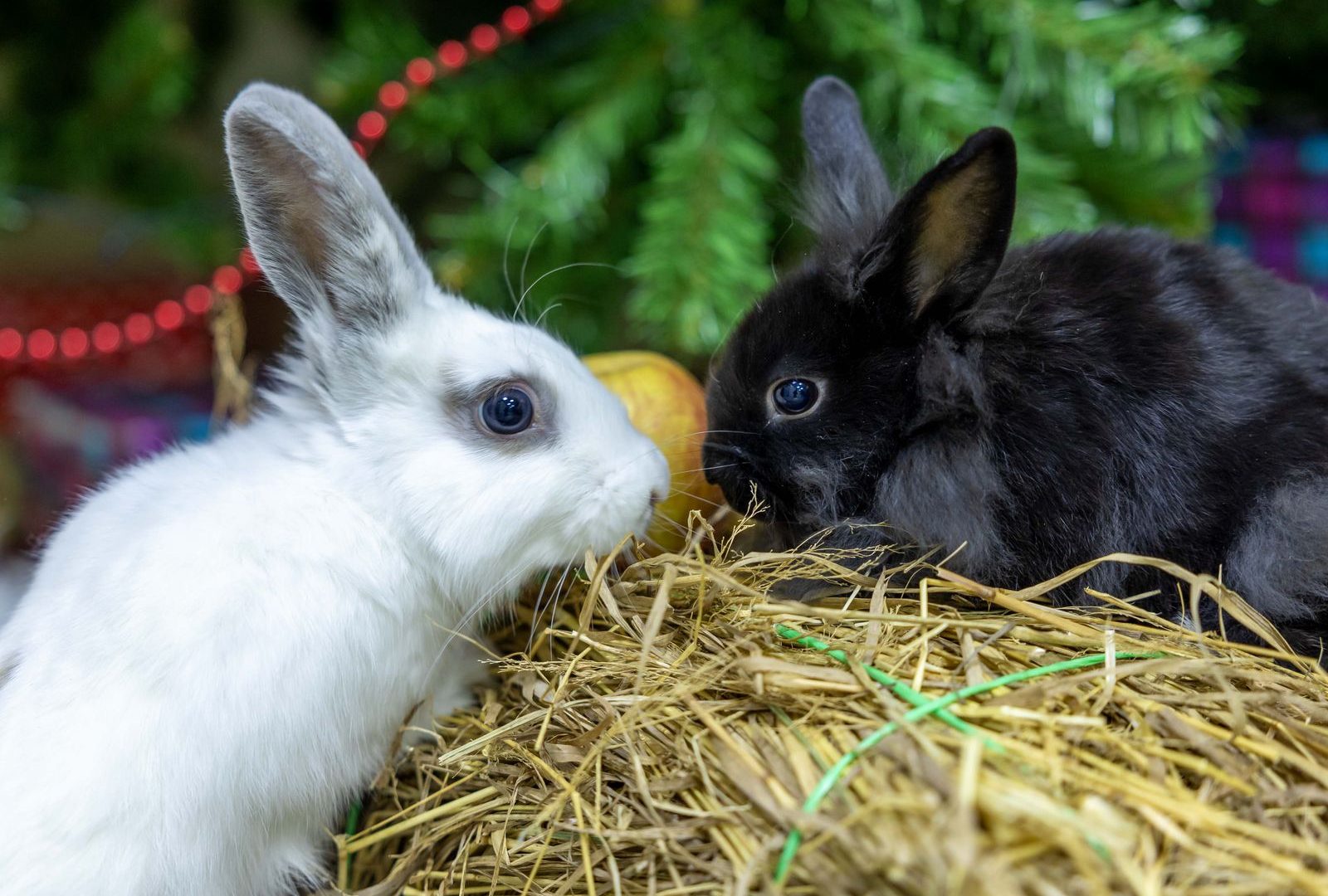
Rabbits have a delicate digestive system that is built to munch grass and hay all day long. When we feed them the wrong things — too many pellets, sugary treats, or the wrong greens — their gut slows down and trouble starts. So the goal of this guide is one thing: keep your rabbit’s tummy moving with the right foods, in the right amounts.
What you will learn
The Simple Answer: The 80/10/10 Rabbit Diet
If you remember only one thing from this guide, make it this: a rabbit’s daily diet should be about 80% hay, 10–15% fresh greens, and 5% pellets, plus a few tiny treats. Fresh water is always available on the side. Why does this ratio work so well? Because it copies what wild rabbits eat. In nature, rabbits graze on grass and leafy plants for hours. All that chewing keeps their ever-growing teeth worn down, and all that fiber keeps their gut moving. Pellets and treats are modern extras — helpful in small amounts, harmful in large ones.
Think of hay as the meal, greens as the salad, pellets as a vitamin, and treats as dessert. Most tummy problems happen when people flip that order.
Here is what a balanced day looks like on a plate:
| Food group | Daily share | Simple picture |
|---|---|---|
| Grass hay | ~80% | A body-sized pile, refilled all day |
| Leafy greens | 10–15% | 1 packed cup per 2 lb of rabbit |
| Pellets | ~5% | 1–2 tablespoons for most adults |
| Treats/fruit | <1% | A thumbnail-sized bite |
1. Hay: The Most Important Food (About 80%)
Hay is not a bedding extra — it is the main meal. An adult rabbit should eat a pile of hay roughly its own body size every single day. It should be there in the morning, during the day, and at night. Unlimited. Always. Why it matters so much: Hay does two big jobs. First, the long fibers push food through the gut and prevent a dangerous slowdown called GI stasis. Second, the side-to-side chewing grinds down teeth that never stop growing. A rabbit that skips hay often ends up with painful dental spurs and a sluggish stomach. How to choose the right hay: For adult rabbits, pick a grass hay — Timothy, orchard grass, meadow, or oat hay. Avoid alfalfa for grown-ups: it is a legume, not a grass, and it is too rich in calcium and protein. Save alfalfa for babies and nursing mothers who need the extra fuel.
| Hay type | Best for | Notes |
|---|---|---|
| Timothy hay | Most adult rabbits | Great all-rounder, easy to find |
| Orchard grass | Adults, dust-sensitive keepers | Soft, sweet-smelling, less dusty |
| Meadow hay | Picky eaters | Mixed textures encourage foraging |
| Oat hay | Variety / enrichment | Crunchy seed heads, feed alongside grass hay |
| Alfalfa | Kits & nursing does only | Too rich for healthy adults |
Pro tip for fussy rabbits: If your bunny turns up its nose at hay, buy a fresh, green, sweet-smelling batch — old brown hay loses its appeal. Store it somewhere dry and airy, and mix a couple of types to keep things interesting. A good hay rack keeps it clean and off the floor so less gets wasted.
2. Fresh Leafy Greens (10–15%)
Greens are the salad course. They add moisture, vitamins, and variety that rabbits love. A good rule is about one packed cup of leafy greens for every 2 pounds of body weight, each day, split across meals. Why variety matters: No single green is perfect, and some (like spinach or kale) are high in things such as calcium or oxalates that can add up if fed daily. So the trick is to rotate. Aim for 3–5 different greens across a week rather than a big pile of just one. How to introduce greens safely: Go slow. Add one new green at a time and wait 24–48 hours to check that droppings stay firm and normal. Wash everything well, and serve it at room temperature, not fridge-cold.
| ✅ Great daily greens | 🔁 Feed in rotation (smaller amounts) |
|---|---|
| Romaine & leaf lettuce | Kale |
| Cilantro, basil, parsley | Spinach |
| Bok choy | Swiss chard |
| Carrot tops | Broccoli leaves |
| Dandelion greens | Mustard greens |
3. Pellets: Small but Useful (About 5%)
Pellets are a modern convenience that pack vitamins and minerals into a small bite. They are helpful — but only in a small amount. For most adult rabbits, that means just 1 to 2 tablespoons (about ¼ cup) per day. Baby and giant breeds may need a little more; small breeds a little less. Why so little? Pellets are calorie-dense and easy to overeat. A rabbit that fills up on pellets stops eating enough hay — and that is when teeth and tummy trouble begins. Overfeeding pellets is one of the top causes of overweight, hay-refusing rabbits. How to choose a good pellet: Look for a plain, uniform, grass-based pellet that is high in fiber (18% or more) and lower in protein. Skip the colorful “muesli” mixes with dried corn, seeds, and rainbow bits — rabbits pick out the sugary pieces and leave the healthy ones. This habit, called selective feeding, leads straight to an unbalanced diet.
4. Treats & Fruit: Tiny Amounts Only
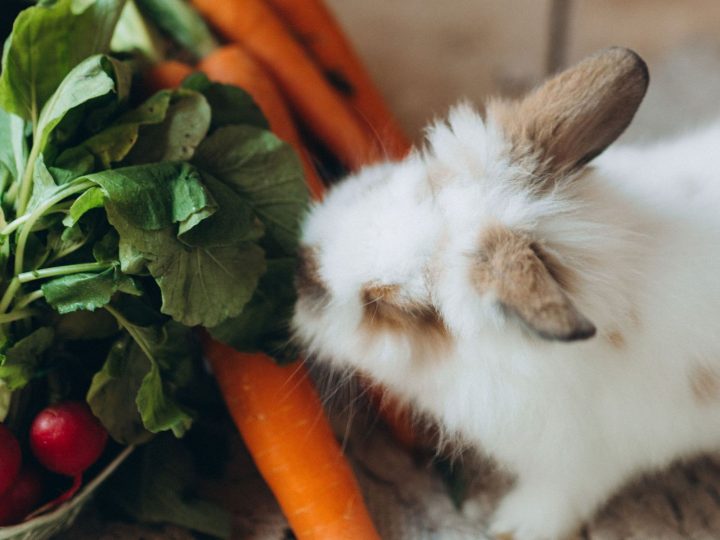
Yes, rabbits can have treats — and treats are a wonderful way to build trust and reward good behavior. But fruit and sugary veggies should be occasional, thumbnail-sized bites, not a daily habit. Why go easy: A rabbit’s gut is tuned for fiber, not sugar. Too much fruit feeds the wrong gut bacteria and can trigger soft stools or painful gas. A safe guideline is no more than 1–2 tablespoons of fruit per 5 pounds of body weight, a couple of times a week. Safe treat ideas: a slice of banana, a few blueberries, a small piece of apple (no seeds), a strawberry, or a thin ribbon of carrot. Herbs like mint and dill also make healthy, low-sugar rewards. And remember the classic myth — carrots are a treat, not a staple, because they are surprisingly sugary.
The best treat is often not food at all. Many rabbits love a head rub, a new cardboard box, or a fresh sprig of herb just as much as a bite of fruit.
5. Fresh Water — Always Available
Water is easy to overlook, but a rabbit that drinks too little is at real risk of gut slowdown. Provide clean, fresh water 24/7 and change it daily. Bowl or bottle? Most rabbits drink more from an open bowl because it is a natural head-down position. A heavy ceramic bowl is hard to tip and easy to clean. Bottles are tidy and stay cleaner but can clog or freeze — check the spout works every day. Many keepers offer both.
Shopping suggestion · Amazon
Premium Timothy Hay for Rabbits
The foundation of every healthy rabbit diet. Fresh, green, sweet-smelling Timothy hay keeps teeth trim and the gut moving — the single most important thing you can buy for your bunny.
- Hand-selected long strands that encourage natural foraging and chewing
- High fiber, low protein — ideal for healthy adult rabbits
- Low dust options available for sensitive noses and tidy hutches
- Resealable bulk bags keep hay fresh longer and save money
As an Amazon Associate we earn from qualifying purchases. Affiliate links never decide what we recommend.
Rabbit Feeding Chart by Age
A rabbit’s needs change as it grows. Babies need rich, high-calcium food to build bones; adults need mostly fiber; seniors may need gentle tweaks. Use this quick chart as your map.
| Life stage | Hay | Pellets | Greens |
|---|---|---|---|
| Baby (0–7 weeks) | Mother’s milk + alfalfa hay | Alfalfa, unlimited | None yet |
| Young (7 wks–6 mo) | Unlimited alfalfa + grass hay | Alfalfa, generous | Introduce slowly at ~12 wks |
| Adult (6 mo–5 yr) | Unlimited grass hay | 1–2 tbsp Timothy pellets | 1 cup per 2 lb |
| Senior (5+ yr) | Unlimited grass hay | Adjust to weight | Keep variety, watch appetite |
Foods That Are Dangerous for Rabbits
Some foods are not just unhealthy — they are genuinely risky. Keep these away from your rabbit completely, and make sure kids and guests know the rules too.
| ❌ Never feed | Why it is dangerous |
|---|---|
| Chocolate, candy, sugary snacks | Toxic; overwhelms the gut |
| Bread, crackers, pasta, cereal | Starchy; causes gas and stasis |
| Iceberg lettuce (large amounts) | Watery, can cause diarrhea |
| Avocado | Contains persin, toxic to rabbits |
| Onion, garlic, leek, chives | Can damage blood cells |
| Potato, rhubarb, raw beans | Toxic compounds |
| Meat, dairy, yogurt drops | Rabbits are strict herbivores |
| Nuts, seeds, corn kernels | Too fatty; choking & blockage risk |
Common Rabbit Feeding Mistakes (and How to Fix Them)
Pro Tips From Experienced Rabbit Keepers
- Feed hay first, pellets second. Offer hay in the morning so your rabbit fills up on fiber before the tastier pellets arrive.
- Watch the poop. Healthy droppings are round, dry, and plentiful. Small, few, or misshapen poops are an early warning sign.
- Weigh monthly. A kitchen scale catches slow weight gain or loss before it becomes a problem.
- Scatter-feed greens. Hiding greens around the pen turns dinner into enrichment and slows down fast eaters.
- Keep a food journal. Note new foods and any changes in droppings — it makes vet visits far more useful.
Real-Life Example: Learning From the Rabbit Community
A common story shows up again and again in rabbit groups online. A new owner shares that their bunny suddenly “won’t eat hay” and only wants pellets and treats. Experienced keepers almost always give the same advice: cut the pellets right down, remove the sugary treats, and offer only fresh hay and a little greens for a few days. Within a week, most of these rabbits are munching hay happily again. The lesson is powerful and simple: rabbits will hold out for junk food if we let them — just like kids. When hay is the main option, they eat it, and their health bounces back. It is rarely that the rabbit “hates hay.” Usually the hay is old, or there are simply too many tastier choices on the menu.
The most helpful thing you can do for a picky rabbit is make hay the easy, obvious, always-there choice — and make treats rare.
Frequently Asked Questions
Can rabbits eat carrots every day?
No. Carrots are high in sugar and should be an occasional treat — a thin slice now and then. Carrot tops (the leafy greens) are much healthier and can be fed more often.
How much should a rabbit eat each day?
Unlimited grass hay, about one packed cup of leafy greens per 2 pounds of body weight, 1–2 tablespoons of pellets, and only a tiny bit of treat food. Fresh water always.
Why won’t my rabbit eat hay?
Usually the hay is stale or there are too many tastier foods available. Offer fresh, green, sweet-smelling hay, cut back pellets and treats, and try mixing two hay types. If a rabbit truly stops eating everything, see a vet quickly.
Can baby rabbits eat vegetables?
Not at first. Under 12 weeks, kits do best on mother’s milk, alfalfa hay, and alfalfa pellets. Introduce greens slowly and one at a time after about 12 weeks.
What can rabbits drink besides water?
Just water. Rabbits should not have milk, juice, or sugary drinks. Clean, fresh water is all they need.
Is it safe to change my rabbit’s food brand?
Yes, but do it gradually. Mix a little of the new pellet into the old over a week so the gut can adjust without upset.
Your Rabbit Feeding Checklist ✅
- Unlimited fresh grass hay available at all times
- Leafy greens: about 1 cup per 2 lb, rotated for variety
- Pellets measured: 1–2 tablespoons for most adults
- Treats kept tiny and occasional (a thumbnail bite)
- Clean, fresh water changed daily
- No dangerous foods within reach
- New foods introduced slowly, one at a time
- Droppings and weight checked regularly
Get these basics right and you have given your rabbit the greatest gift of all: a long, comfortable, healthy life. Feeding does not need to be complicated — it needs to be consistent. Fill the hay rack, offer a rainbow of greens, keep pellets and treats small, and your bunny will thrive. 🐇 Keep exploring: pair good feeding with the right home using our hutch sizing guide, keep the air healthy with our ventilation guide, and build trust at mealtime with our gentle handling routine.
Related buying guides
What to look for before you buy. These guides contain clearly labelled Amazon affiliate links.
Related guides
Can Rabbits Eat That? Safe Foods List
"Can rabbits eat this?" It is the question every owner types into Google, treat in hand,…
Rabbit Water: Bowl vs Bottle
Worried your rabbit is not drinking enough? You are right to pay attention. Water is one…
The Off-Grid Homestead Rabbit System
A complete off-grid homestead rabbit system — power-free housing, feeding from your land, gravity and rainwater…