Colony vs cage — the honest tradeoff
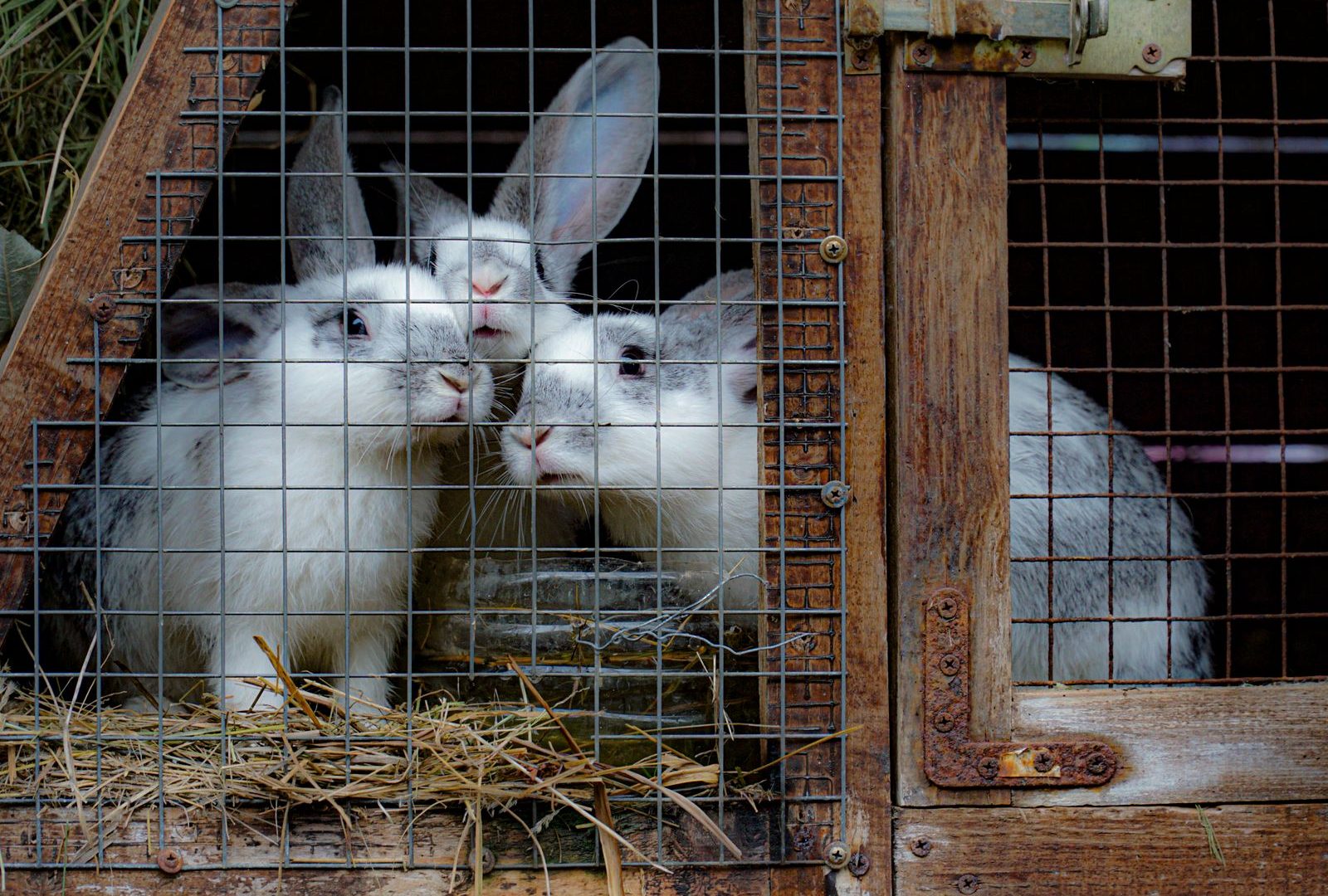
Colony or cage is one of the first big questions new rabbit keepers ask — and the honest answer is that both work. Each suits a different mix of welfare goals, labour, space and record-keeping. This guide lays out the real tradeoffs without tribalism, so you can pick what fits your setup.
What each system actually means
A cage system houses rabbits individually (or in carefully managed pairs) in defined pens — often stacked or in rows. A colony keeps a group together on the ground or in a large enclosure, with shared space, shelter and enrichment. Most homesteads eventually land somewhere on the spectrum between the two.
Welfare and enrichment
Colonies allow more natural behaviour: rabbits dig, forage, socialise and choose their company. That enrichment is a genuine welfare plus. But group living also means social stress, squabbles and the occasional injury, and it demands more space per rabbit to work well. Cages give each animal a calm, predictable territory and make it easy to guarantee food, water and rest — at the cost of the room to roam that a colony offers. Neither is automatically “more humane”; welfare comes from how well the system is run.
Labour and daily routine
- Cages: quicker daily feeding and watering passes, and cleaning is contained. Individual checks are fast.
- Colonies: more labour overall — deeper cleaning, more observation to spot a rabbit that is off, and time spent managing group dynamics.
Disease and parasite management
This is the colony’s hardest challenge. Shared ground means shared pathogens and parasites (coccidia, mites, worms), and a sick rabbit can expose the whole group before you notice. Cages isolate individuals, making it far easier to contain illness, quarantine new arrivals and keep records of who is unwell. If biosecurity is a priority, cages have the edge.
Record-keeping and breeding control
Cages make parentage certain: you know exactly which buck bred which doe and when. Colonies blur this — bucks and does together means unplanned and untracked litters unless you manage grouping carefully. For anyone selecting breeding lines or keeping pedigrees, cage systems keep records clean; colonies need a separation pen and a disciplined routine to stay organised.
Predators and security
A ground colony’s larger footprint is harder to fully predator-proof than a compact, elevated cage row. Colonies need a buried hardware-cloth perimeter, secure overhead cover and a reliable night routine. Cages lift rabbits off the ground and shrink the perimeter you must defend.
Cost
Colonies often win on per-rabbit cost once built — less hardware per animal — but the up-front investment in secure fencing, shelter and space is higher. Cages scale predictably: add a unit, add a rabbit.
Side-by-side summary
| Factor | Cage system | Colony system |
|---|---|---|
| Enrichment | Lower | Higher |
| Daily labour | Lower | Higher |
| Disease control | Easier | Harder |
| Record-keeping | Precise | Difficult |
| Predator-proofing | Simpler | Demanding |
| Per-rabbit cost | Higher | Lower (after build) |
How to decide
- Choose cages if you value clean records, tight disease control, easy individual care, or you are just starting out.
- Choose a colony if enrichment and natural behaviour are your priority, you have the space, and you can commit to the extra labour and predator planning.
- Many keepers run a hybrid: a colony for grow-outs and companionship, with cages for breeding does and quarantine.
This is educational husbandry guidance, not veterinary advice. For health, disease or breeding-management questions specific to your rabbits, consult a rabbit-savvy veterinarian.
You might also like

How to Litter Train a Rabbit
Tired of finding little surprises all over the floor? You are not alone. Almost every new rabbit owner asks the same question:…
Read →
Rabbit Water: Bowl vs Bottle
Worried your rabbit is not drinking enough? You are right to pay attention. Water is one of the most overlooked parts of…
Read →
What Do Rabbits Eat? Complete Diet Guide
Feeding a rabbit sounds simple — until you Google it and get 20 different answers. One site says carrots, another says never…
Read →